This PDF offers a concise overview of computer networking fundamentals, covering key concepts such as the OSI model, TCP/IP stack, common topologies, essential devices, and security basics. It serves as a practical guide for beginners and professionals alike, enabling quick reference and deeper study
What Is Included in a Networking Basics PDF?
The PDF begins with a concise executive summary that outlines the scope of computer networking, defining core terms such as “node,” “link,” and “protocol.” It then presents a structured table of contents that maps out the learning journey: from foundational concepts like data representation and addressing, through practical insights on how devices exchange information, to a quick‑reference glossary of acronyms. Each chapter is prefaced with clear learning objectives, followed by concise explanations, illustrative diagrams, and real‑world examples that tie theory to everyday networking scenarios. The document also includes a set of annotated screenshots showing common configuration interfaces, a troubleshooting checklist for connectivity issues, and a brief survey of industry standards that govern interoperability. To support self‑paced study, the PDF offers a set of short quizzes and a final review section that consolidates key takeaways. A bibliography lists authoritative sources for deeper exploration, and a “Further Reading” appendix points readers toward online courses and vendor white papers. The layout is designed for quick navigation, with consistent heading styles, numbered sections, and a searchable index that allows learners to locate specific topics in seconds.
Readers can download the PDF to annotate directly or print for study daily.
This PDF also includes a glossary of key networking terms, a list of recommended books and links to free online labs for hand practise.
The PDF is available in EPUB and MOBI formats, ensuring compatibility across e‑readers,tablets,smartphones for on‑the‑go learning!.

Importance of PDFs in Networking Education
PDFs provide portable, searchable, and offline resources that enable learners to study complex networking concepts without internet access. They preserve formatting across devices, support annotations, and allow quick reference to diagrams, code snippets, and protocol tables. It also has quizzes daily.
Accessibility and Offline Study Benefits
PDFs are essential for networking education because they are universally accessible across all operating systems and devices. A single PDF file can be opened on Windows, macOS, Linux, Android, or iOS without any compatibility issues, ensuring that students can view course material regardless of their hardware. The fixed layout preserves diagrams, tables, and code snippets exactly as the author intended, which is crucial when learning complex topics like packet formats or protocol layers. PDFs also support full‑text search, letting learners quickly find specific terms or examples within dense technical texts. Embedded hyperlinks can point to external references, glossaries, or research papers, allowing seamless navigation without leaving the PDF reader. For those who travel or work in areas with limited internet, the ability to download a PDF once and study offline is invaluable. This offline capability is especially useful during field training, remote workshops, or in regions with spotty broadband. Many PDF readers provide annotation tools—highlighting, note‑taking, and drawing—so students can actively engage with the material, mark key points, and create personal study aids. These annotations can be exported or shared with classmates, supporting collaborative learning. PDFs can also be compressed to reduce file size while maintaining readability, making them easy to distribute via email, learning management systems, or cloud services. The combination of portability, searchability, visual fidelity, and offline functionality makes PDFs indispensable for anyone studying computer networking and professional development and certification preparation. This flexibility supports learning styles now! quickly
OSI Model Overview
The OSI model divides networking into seven layers: Physical, Data Link, Network, Transport, Session, Presentation, and Application. Each layer handles specific functions, enabling modular design, interoperability, and troubleshooting across diverse technologies. for all now
Seven Layers and Their Functions
In networking, the OSI model’s seven layers each perform distinct tasks, ensuring data travels smoothly from source to destination. The lowest level, Physical, deals with raw bit transmission over cables or wireless media, defining voltage, timing, and connector types. Above it, the Data Link layer frames packets, manages MAC addresses, and handles error detection and flow control, ensuring reliable link-level delivery. The Network layer routes packets across multiple networks, using logical addressing (IP) and routing protocols to find optimal paths. The Transport layer guarantees end-to-end delivery, providing segmentation, reassembly, congestion control, and reliability via TCP or speed-oriented UDP. The Session layer establishes, maintains, and terminates sessions between applications, managing dialog control and synchronization. The Presentation layer translates data formats, encrypts, compresses, and converts character sets, making sure data is readable by the receiving application; Finally, the Application layer offers network services directly to end users, such as HTTP, FTP, SMTP, DNS, and file sharing, enabling software to communicate over the network This PDF compiles essential networking knowledge into a compact, offline-friendly format, allowing learners to review protocols, topologies, and device roles without relying on internet access

TCP/IP Stack Fundamentals
The TCP/IP stack divides networking into four layers: Application, Transport, Internet, and Network Access. It defines protocols like HTTP, TCP, IP, and Ethernet, enabling reliable, ordered data delivery across diverse networks while abstracting hardware differences
Protocol Layers and Data Flow
The TCP/IP model structures communication into four distinct layers, each responsible for specific functions that collectively enable end‑to‑end data transmission. At the Application layer, protocols such as HTTP, FTP, SMTP, and DNS translate user requests into network‑ready packets, providing the interface that applications use to request services. Moving down, the Transport layer ensures reliable delivery through TCP, which segments data, manages sequencing, and handles retransmission, while UDP offers a lightweight, connectionless alternative for time‑sensitive traffic. The Internet layer, dominated by IP, assigns logical addresses and routes packets across heterogeneous networks, employing routing tables and protocols like OSPF or BGP to determine optimal paths. Finally, the Network Access layer encapsulates data into frames suitable for the underlying physical medium, handling MAC addressing, error detection, and link‑layer protocols such as Ethernet or Wi‑Fi. Data flows upward from the physical medium, through each layer’s encapsulation process, until it reaches the application layer, where it is interpreted and acted upon. Conversely, outgoing data descends through the layers, each adding its header, until it is transmitted over the physical link. This layered approach promotes modularity, interoperability, and scalability across global networks.
This overview equips readers to grasp networking fundamentals!

Network Topologies Explained
Network topologies define how devices interconnect; Common styles include mesh, star, bus, and ring. Mesh offers full redundancy, star centralizes traffic, bus links all nodes in a single line, and ring passes data sequentially. Each topology balances performance, cost, and fault tolerance. Learn.!!
Mesh, Star, Bus, and Ring Configurations
Mesh topology connects every node to all others, providing maximum redundancy. Though expensive, it guarantees data paths even if multiple links fail, making it ideal for mission‑critical environments.
Star topology centralizes all devices to a single hub or switch. It simplifies cable management and fault isolation, but the central device becomes a single point of failure unless redundancy is added.
Bus topology uses one backbone cable to which all nodes attach. It is inexpensive and easy to install, yet performance drops as more devices share the medium, and a single break can cripple the network.
Ring topology links each node to two neighbors, forming a closed loop. Data travels in one direction until it reaches its destination. A single broken link can isolate the entire ring unless a spare line or spanning‑tree protocol is in place.
Choosing a topology requires balancing cost, scalability, fault tolerance, and application needs. Understanding each configuration’s strengths and weaknesses is essential for designing reliable, efficient networks.
In practice, hybrid topologies combine elements of the basic styles to meet specific performance and budget constraints. For example, a star‑mesh hybrid uses a central switch with redundant links to critical servers, while peripheral devices remain in a star arrangement. Such designs provide both fault tolerance and efficient bandwidth usage.
Simulated traffic tests confirm topology resilience before live deployment, cutting downtimes.

Key Networking Devices
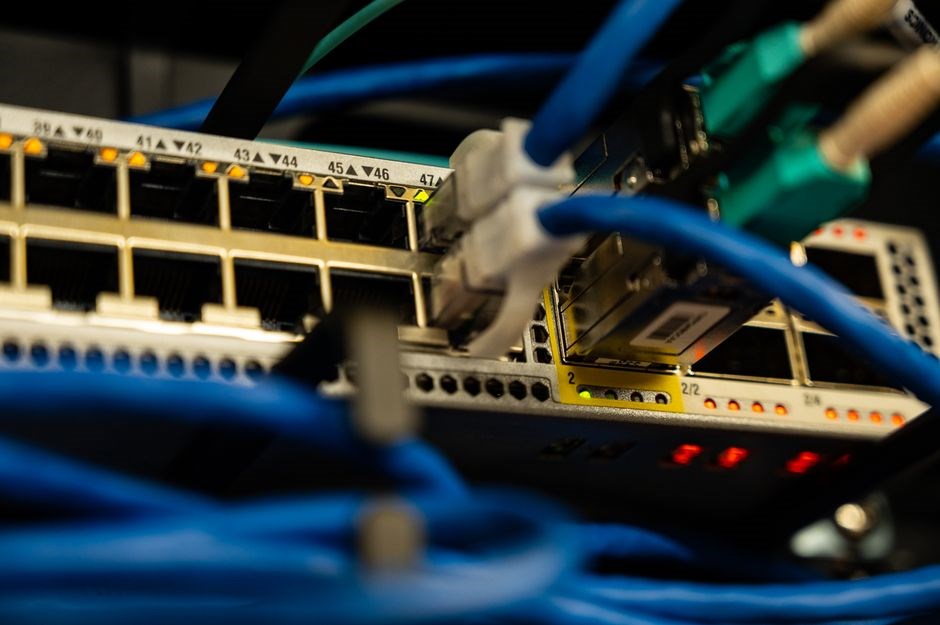
Routers direct traffic between networks, using IP routing tables. Switches forward frames within a LAN based on MAC addresses, improving bandwidth. Hubs broadcast all signals, offering simplicity but low efficiency. Access points extend Wi‑Fi coverage, bridging wireless and wired segments. All vital
This PDF offers a concise overview of computer networking fundamentals, covering key concepts such as the OSI model, TCP/IP stack, common topologies, essential devices, and security basics. It serves as a practical guide for beginners and professionals alike, enabling quick reference and deeper study.
The document contains diagrams, glossary terms, step‑by‑step tutorials, and real‑world scenarios that illustrate how data moves across networks. It also includes troubleshooting checklists and configuration examples for routers, switches, and wireless access points;
PDFs preserve formatting across devices, making them ideal for study materials that need to remain consistent. They can be annotated, bookmarked, and shared easily, supporting collaborative learning environments.
Students can download PDFs and review them without an internet connection, ensuring uninterrupted learning during field trips or remote work sessions.
The OSI model is a conceptual framework that standardizes the functions of a telecommunication system into seven distinct layers, each responsible for specific networking tasks.
From physical transmission to application services, each layer handles data encapsulation, addressing, routing, and user interaction, enabling interoperability among diverse hardware and software.
The TCP/IP stack is the foundation of internet communication, comprising four layers that manage everything from packet delivery to application protocols.
Data flows from the application layer down to the network interface, with each layer adding headers and performing error checking before transmission.
Network topologies define how devices are interconnected, influencing performance, scalability, and fault tolerance.
Mesh offers redundancy, star simplifies management, bus is cost‑effective, and ring provides deterministic traffic flow.
Routers, switches, hubs, and access points are the building blocks of modern networks, each serving a unique role in data transmission.
Routers, Switches, Hubs, and Access Points
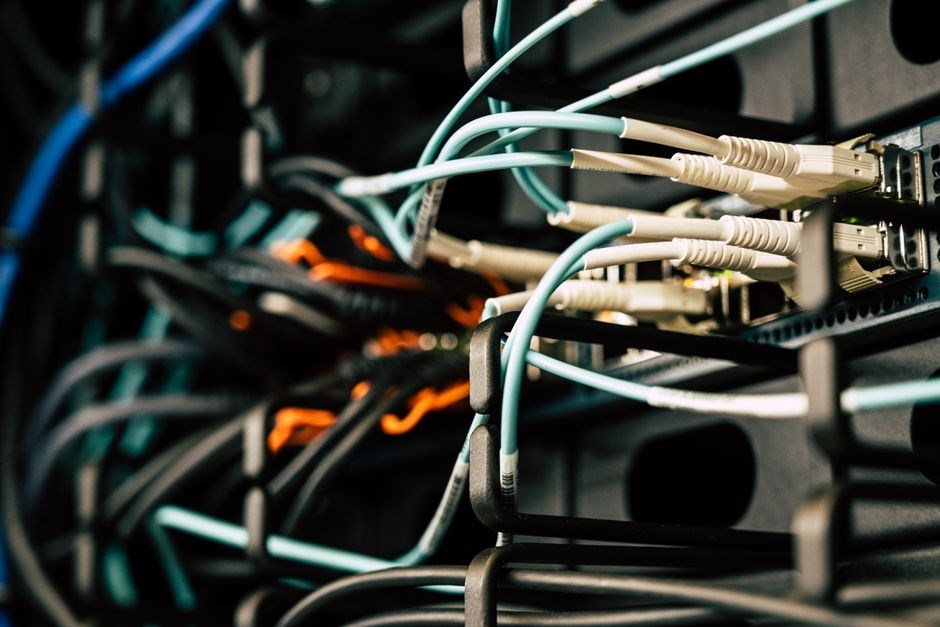
Enterprise routers integrate MPLS, QoS, and redundant power for high availability. Switches allow administrators to configure VLANs, set port speeds, and monitor traffic statistics via SNMP. They can deliver up to 30 W per port, powering cameras, VoIP phones, and access points without separate power supplies. Hubs are simple repeaters that broadcast all traffic to every connected port, creating collision domains that degrade performance. They lack MAC address tables, so they cannot filter traffic or support full‑duplex operation. Consequently, hubs are rarely used in networks, replaced by switches and routers. Access points translate wireless signals to wired Ethernet, often using 802.11ac or 802.11ax standards. They support multiple SSIDs, guest isolation, and WPA3 encryption. Modern APs can perform band steering, load balancing, and mesh networking to extend coverage without additional cabling. They also support roaming across APs!
Security Considerations in Networking
This PDF highlights essential security measures for network design, including firewalls, encryption, and access control. It explains how to protect against common attacks such as spoofing, DoS, and eavesdropping, and offers best practices for secure configuration and monitoring. Secure practices reduce risk!!
Common Threats and Mitigation Strategies
Network environments face a spectrum of risks that can compromise confidentiality, integrity, and availability. The most frequent threats include:
- Phishing and social engineering: trick users into revealing credentials or installing malware.
- Denial‑of‑Service (DoS) and Distributed DoS (DDoS): overwhelming a target with traffic to exhaust resources.
- Man‑in‑the‑Middle (MitM): intercepting or altering data between parties.
- Malware and ransomware: malicious code that can encrypt data or exfiltrate info.
- Unauthorized access: exploitation of weak passwords or unpatched systems.
Mitigation strategies are layered and should be integrated into the network design:
- Strong authentication: enforce multi‑factor authentication and password policies.
- Regular patching: keep operating systems, firmware, and applications up to date.
- Network segmentation: isolate critical segments to limit lateral movement.
- Encryption: use TLS, IPsec, or VPNs to protect data in transit.
- Intrusion detection and prevention systems (IDS/IPS): monitor traffic for anomalous patterns.
- Endpoint protection: deploy antivirus, host‑based firewalls, and application whitelisting.
By combining technical controls with user education, organizations can reduce the likelihood of successful attacks and respond swiftly when incidents occur.

Updates resilience!!!