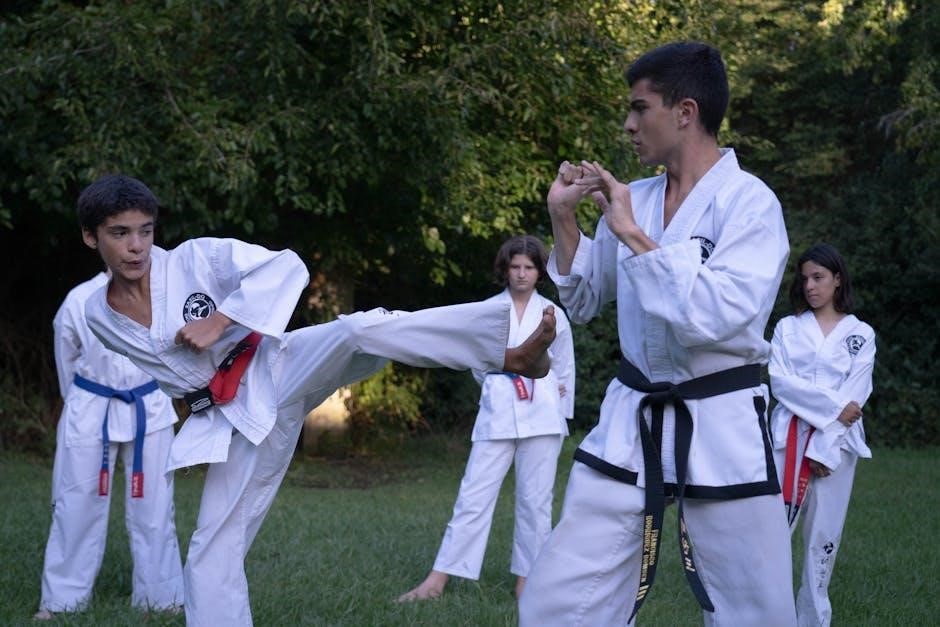
Karate Belt Size Guide: A Comprehensive Overview (Updated 04/09/2026)
Navigating the world of karate requires understanding belt systems, and proper sizing is crucial for comfort and safety during training sessions․
Karate belts, more than just fabric, visually represent a student’s journey and dedication within the art․ Historically, the obi (belt) served a practical purpose, securing the gi (uniform)․ Over time, it evolved into a symbolic system denoting progress and skill․ The colored belt system, while not present in all traditional Japanese martial arts initially, became widely adopted to clearly illustrate a student’s level of proficiency․
Understanding the significance of each color is key to appreciating the discipline and commitment required in karate training․
The Significance of Belt Ranking
Belt ranking in karate isn’t merely about achieving a different color; it signifies demonstrated mastery of techniques, understanding of principles, and personal development․ Each level represents a commitment to continuous learning and self-improvement․ Advancement isn’t solely based on time spent training, but on consistent effort, discipline, and successful passing of grading examinations․
The ranking system fosters a structured learning environment and provides tangible goals for students to strive towards, building confidence and resilience․
Understanding Karate Belt Colors
Karate belt colors represent a student’s progression through the ranks, each hue symbolizing increasing skill and understanding․ While variations exist between styles, a common progression begins with white, signifying purity and potential․ Subsequent colors – yellow, orange, green, blue, purple, brown – denote growing proficiency and commitment․
Ultimately, black represents mastery, though it’s not an endpoint, but a new beginning of continued learning and refinement of technique․
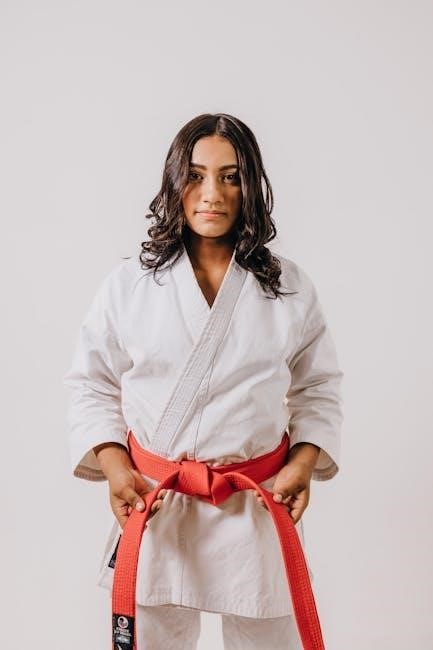
White Belt: The Beginner’s Journey
The white belt marks the initial phase, representing a clean slate and the commencement of fundamental karate training and discipline․
What the White Belt Represents
The white belt in karate symbolizes purity, innocence, and new beginnings․ It signifies the student’s entry into the art, devoid of prior knowledge or experience․ Representing a blank canvas, the white belt embodies humility and a willingness to learn from instructors and fellow practitioners․ It’s a visual reminder of the long journey ahead, demanding dedication, respect, and perseverance․ The wearer acknowledges their novice status and commits to the rigorous training required to progress through the ranks, embracing the foundational principles of karate-do․
Typical Training Focus for White Belts
White belt training heavily emphasizes foundational stances, basic blocks, and fundamental punches․ Students concentrate on proper form and technique, building muscle memory and developing body awareness․ Repetitive drills reinforce correct posture and movement patterns, establishing a solid base for future skills․ Emphasis is placed on discipline, respect, and understanding the dojo’s etiquette․ Physical conditioning, including stretching and light calisthenics, prepares the body for more demanding training, fostering a strong foundation for karate progression․

Yellow Belt: First Steps Towards Proficiency
Achieving a yellow belt signifies initial progress, demonstrating a grasp of basic techniques and a growing commitment to karate principles․
Skills Developed at the Yellow Belt Level
At the yellow belt stage, practitioners begin solidifying fundamental stances, blocks, and punches, enhancing their coordination and body awareness․ They’re expected to demonstrate improved balance and control while executing these techniques with increasing speed and accuracy․
Yellow belts also start to develop a basic understanding of kihon (basics), learning to apply power generation principles․ Furthermore, they’re introduced to simple kata (forms), fostering memory, rhythm, and the ability to link movements together fluidly, building a foundation for more complex techniques․
Common Techniques Practiced
Yellow belt training commonly emphasizes foundational techniques like gedan barai (downward block), age uke (rising block), and chudan oi-zuki (middle-level punch)․ Practitioners refine their zenkutsu dachi (front stance) and kokutsu dachi (back stance), crucial for stability and power․
Basic kicking techniques, such as mae geri (front kick), are introduced, focusing on proper form and target accuracy․ Repetitive drilling of these techniques builds muscle memory and reinforces correct body mechanics, preparing students for more advanced movements․
Orange Belt: Building a Foundation
At the orange belt level, karateka solidify basic stances and techniques, increasing power and coordination through consistent practice and refinement․
Progress and Challenges at the Orange Belt Stage
The transition to orange belt signifies notable progress, demanding increased focus on technique precision and applying learned principles with greater consistency․ Students often encounter challenges refining their stances, ensuring proper alignment, and generating power efficiently․ Maintaining discipline during repetitive drills becomes paramount, as does developing the ability to smoothly link techniques together․
Furthermore, the orange belt stage introduces more complex combinations, requiring improved timing and spatial awareness․ Overcoming plateaus in physical conditioning and mental fortitude are common hurdles, necessitating dedication and perseverance to advance․
Key Concepts Introduced
At the orange belt level, students begin to grasp the interconnectedness of karate principles, moving beyond isolated technique practice․ Emphasis shifts towards understanding kime – focusing power to a single point – and utilizing proper body mechanics for maximum impact․ The concept of maai, or appropriate distancing, becomes crucial for effective self-defense․
Furthermore, students are introduced to the importance of breath control (kokyu) in coordinating movement and generating internal energy․ Developing a strong base and maintaining balance during dynamic techniques are also key focuses․
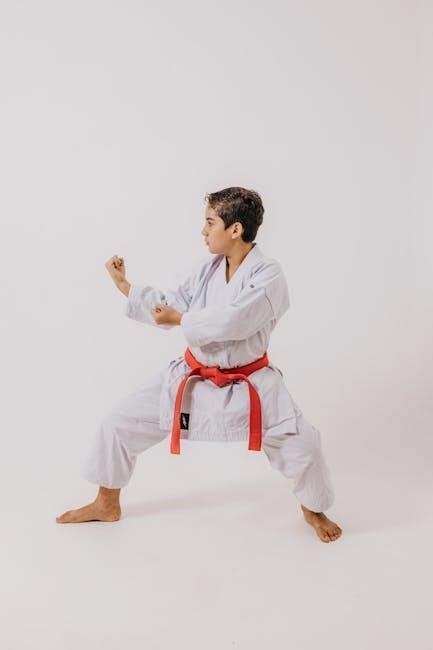
Green Belt: Developing Core Skills
Reaching green belt signifies solidifying foundational techniques, enhancing coordination, and demonstrating increasing proficiency in basic karate principles and forms․
The Green Belt as a Milestone
The attainment of a green belt in karate represents a significant achievement, marking a transition from solely learning basic movements to actively applying them with growing confidence and control․ Students at this stage demonstrate a noticeable improvement in their stances, strikes, and blocks, showcasing a developing understanding of proper form and technique․
It’s a point where practitioners begin to internalize the principles of karate, moving beyond rote memorization towards a more intuitive and fluid execution of techniques․ This milestone fosters a deeper connection to the art and motivates continued dedication to training․
Refining Basic Techniques
Green belt training heavily emphasizes refining previously learned basic techniques, focusing on precision, power generation, and efficient movement․ Students dedicate time to perfecting fundamental stances like zenkutsu dachi and kokutsu dachi, ensuring proper alignment and balance․ Strikes, such as oi-zuki and gyaku-zuki, are analyzed and corrected for optimal impact and form․
This stage isn’t about learning entirely new moves, but about solidifying the foundation, eliminating bad habits, and building a strong technical base for future advancement within the karate discipline․
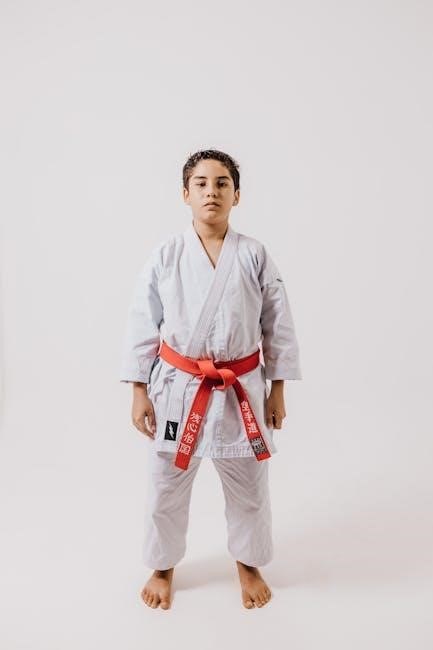
Blue Belt: Intermediate Level
Reaching the blue belt signifies a transition to intermediate training, demanding increased focus and dedication to mastering complex karate principles․
Increased Complexity of Training
As a blue belt, karateka encounter a noticeable shift in training intensity and sophistication․ Drills become more intricate, demanding greater precision and coordination․ Expect a deeper dive into kihon (basics), kata (forms), and kumite (sparring), with an emphasis on applying techniques with power and control․
Training now incorporates more dynamic movements and combinations, requiring improved stamina and mental fortitude․ Instructors begin to challenge students with more complex scenarios, fostering adaptability and strategic thinking․ The focus expands beyond simply doing the techniques to understanding their underlying principles and applications․
Blue belt students typically begin learning more complex kata, moving beyond the foundational forms practiced at lower ranks․ These advanced kata often feature longer sequences, faster transitions, and more challenging stances, demanding increased memorization and physical conditioning․
The emphasis shifts towards understanding the bunkai – the practical applications of the movements within the kata․ Students are encouraged to analyze each technique, visualizing its use in self-defense scenarios․ This stage fosters a deeper appreciation for the strategic depth of karate․

Purple Belt: Strengthening Techniques
Purple belts refine power and precision, focusing on impactful strikes and blocks while developing fluid combinations for sparring and kata performance․
Focus on Power and Precision
At the purple belt level, karateka intensely concentrate on maximizing the effectiveness of each technique․ This involves not just physical strength, but also impeccable form and focused intent․ Students learn to generate power from their core, transferring it efficiently through their limbs to deliver strikes with greater impact․
Precision becomes paramount; techniques must be executed with accuracy to target vulnerable areas and avoid wasted energy․ Drills emphasize proper body alignment, timing, and control, ensuring that every movement contributes to the overall force and effectiveness of the technique․
Developing Combinations
Purple belt students begin to seamlessly link individual techniques into flowing combinations, moving beyond isolated movements․ This stage emphasizes the practical application of karate, preparing practitioners for self-defense scenarios and kata performance․ They learn to transition smoothly between blocks, strikes, and stances, creating a continuous and dynamic sequence of actions․
Developing combinations requires understanding timing, distance, and balance, allowing for effective counterattacks and adaptive responses․ Students refine their ability to anticipate an opponent’s movements and react accordingly, building a versatile skillset․
Brown Belt: Pre-Black Belt Stage
Brown belt signifies advanced proficiency, demanding intense refinement of technique and spirit as students prepare for the rigorous black belt examination․
The Brown Belt – A Period of Refinement
The brown belt stage in karate isn’t merely about mastering techniques; it’s a dedicated period of intense refinement, pushing practitioners to perfect every movement and understand the underlying principles․ This phase demands unwavering commitment, as students meticulously analyze their strengths and weaknesses, striving for seamless execution․
Expect increased scrutiny from instructors, focusing on precision, power, and the subtle nuances of each kata and kumite application․ Brown belts are expected to demonstrate leadership qualities, assisting lower-ranked students and embodying the spirit of karate-do․
Preparing for Black Belt Examination
The journey to black belt culminates in a rigorous examination, demanding years of dedicated training and unwavering commitment․ Preparation involves not only perfecting established techniques but also demonstrating a deep understanding of karate’s philosophical underpinnings․ Expect intense physical conditioning, countless kata repetitions, and challenging kumite sparring sessions․
Mental fortitude is paramount; candidates must exhibit composure, focus, and a clear demonstration of their karate-do spirit․ Mock examinations and personalized feedback from instructors are crucial components of this final preparation stage․
Different Brown Belt Degrees (Kyū/Dan)
Brown belt ranks represent the final stages before black belt, often divided into degrees (Kyū or lower Dan levels) signifying increasing proficiency․ These degrees aren’t universally standardized, varying between styles and dojos․ Typically, a brown belt progresses through several stages, each demanding greater technical precision, kata mastery, and kumite application․
Higher brown belt degrees often involve leadership responsibilities, assisting with lower-rank training, and demonstrating a deeper understanding of karate principles․
Black Belt: Mastery and Continued Learning
Achieving a black belt isn’t an endpoint, but a commencement of lifelong learning, refining skills, and embodying the spirit of karate-do․
What Achieving Black Belt Signifies
Earning a black belt in karate represents significant dedication, discipline, and a profound understanding of fundamental techniques and principles․ It’s a testament to years of rigorous training, perseverance through challenges, and a commitment to personal growth․ However, it doesn’t denote perfection; rather, it symbolizes a mastery of the basics and the capacity for continued advancement․
The black belt signifies readiness to impart knowledge, uphold the traditions of the art, and serve as a role model for aspiring practitioners․ It’s a recognition of technical skill, mental fortitude, and a deep respect for the way of karate․
The Ongoing Journey of a Black Belt
Achieving a black belt isn’t the culmination of a karate journey, but rather a pivotal transition to a new phase of learning and refinement․ Black belts continue to hone their skills, explore advanced techniques, and deepen their understanding of karate’s philosophical underpinnings․
This ongoing pursuit often involves teaching, kata research, and exploring different aspects of the art․ It’s a commitment to lifelong learning, self-improvement, and contributing to the karate community, demonstrating that mastery is a continuous process․
Black Belt Degrees (Dan Levels) and Their Meaning
Black belt ranks aren’t uniform; they’re categorized into ‘Dan’ levels, signifying increasing expertise and dedication․ Each Dan level—from 1st Dan to 10th Dan—represents a deeper understanding of karate’s techniques, principles, and its application to life․
Higher Dans often involve significant contributions to the art, such as teaching, research, or leadership․ Achieving higher Dan levels is a testament to years of unwavering commitment and a profound mastery of karate-do․
Belt Size and Measurement
Accurate belt sizing ensures a secure and comfortable fit during karate practice, preventing distractions and allowing focused training for all skill levels․
Standard Karate Belt Sizes (in inches/cm)
Karate belt sizes aren’t standardized universally, varying slightly between schools and styles, but general guidelines exist․ White belts typically start around 60 inches (152 cm) for children and extend to 88 inches (224 cm) for adults․ As students progress, belt lengths increase incrementally․ Yellow belts might range from 70 to 95 inches (178-241 cm), while brown belts often fall between 80 and 108 inches (203-274 cm)․ Black belts can exceed 110 inches (279 cm) depending on the practitioner’s height and build․ Always confirm specific sizing requirements with your dojo instructor for the most accurate fit․
Measuring for a Karate Belt
Accurate measurement is key to selecting the correct karate belt size․ Use a flexible measuring tape and measure your waist at the natural waistline – typically just above your hip bones․ Do not pull the tape too tight; ensure it’s comfortably snug․ Add approximately 6-12 inches (15-30 cm) to your waist measurement․ This extra length allows for tying a secure knot without excessive strain․ Round up to the nearest inch or centimeter if your measurement falls between sizes․
Waist Measurement Guidelines
Generally, a waist measurement of 27-29 inches requires a 180cm (71 inch) belt․ For 30-32 inch waists, a 200cm (79 inch) belt is suitable․ Those with 33-35 inch waists typically need a 220cm (87 inch) belt․ Larger waist sizes, 36-38 inches, often require a 240cm (94 inch) belt, and 39-42 inches necessitate a 260cm (102 inch) belt․ Always prioritize a slightly longer belt for comfortable tying and adjustments during vigorous training sessions․
Belt Materials and Quality
Karate belts are commonly made from cotton or synthetic materials, each offering different levels of durability, comfort, and shrinkage properties․
Common Belt Materials (Cotton vs․ Synthetic)
Traditional karate belts are often crafted from 100% cotton, prized for its soft texture and comfortable feel against the skin during rigorous training․ However, cotton tends to shrink and fade over time with repeated washing, requiring more frequent replacements․ Synthetic belts, typically made from polyester or a cotton-poly blend, offer increased durability and resistance to shrinking and fading․
These synthetic options maintain their color and shape better, making them a practical choice for frequent use․ While potentially less soft initially, synthetic belts often become more comfortable with each wash, providing a long-lasting and reliable training accessory․
Choosing a Durable Belt
Selecting a durable karate belt involves considering weave density and material quality․ A tightly woven belt, regardless of cotton or synthetic composition, will withstand the stresses of training—kicks, ties, and repeated washing—far better than a loosely woven one․ Look for belts with reinforced stitching at the ends to prevent fraying and unraveling․
Heavier weight belts generally indicate greater durability, though comfort is also a factor․ Investing in a slightly more expensive, well-constructed belt can save money in the long run by reducing the need for frequent replacements․
Belt Weight and Thickness
Belt weight, often measured in ounces or grams, correlates with density and durability․ Thicker belts generally feel more substantial and offer better support during tying and training․ However, excessive thickness can reduce flexibility and comfort, particularly for beginners․
A medium-weight belt strikes a balance between durability and usability․ Consider the karate style; some styles prefer heavier belts, while others favor lighter, more flexible options․ Prioritize a weight that feels comfortable and doesn’t hinder movement․
Belt Care and Maintenance
Proper cleaning and storage extend your belt’s life, maintaining its integrity and appearance throughout your karate journey and training․
Washing and Drying Instructions
Maintaining your karate belt’s cleanliness is essential, but requires careful attention to avoid damage․ Hand washing is generally preferred using cool water and a mild detergent; avoid harsh chemicals or bleach․ Machine washing is acceptable on a gentle cycle, placed inside a mesh laundry bag for protection․
After washing, gently squeeze out excess water – do not wring․ Air drying is highly recommended; lay the belt flat or hang it to dry, avoiding direct sunlight which can cause fading․ Never use a dryer, as the heat can shrink or distort the belt’s shape and fibers․
Proper Belt Storage
Correct storage significantly extends your karate belt’s lifespan and maintains its shape․ Avoid tightly folding or rolling the belt for extended periods, as this can create permanent creases․ Ideally, store it flat, neatly folded, in a cool, dry place away from direct sunlight․
A breathable cloth bag is an excellent storage option, protecting it from dust and damage․ Avoid storing it in plastic bags, which can trap moisture and lead to mildew․ Proper care ensures your belt remains a symbol of your dedication․
Extending the Life of Your Belt
To maximize your karate belt’s durability, consistent and mindful care is essential․ Limit exposure to harsh chemicals, like strong detergents or bleach, during washing․ Air drying is preferable to machine drying, preventing shrinkage and fiber damage․ Regularly inspect the belt for wear and tear, addressing minor issues promptly․
Rotating between multiple belts, if possible, allows each to fully dry and recover between training sessions, prolonging their overall lifespan and maintaining optimal condition․
Variations in Belt Systems
Different karate styles—Shotokan, Goju-Ryu, and others—employ unique belt ranking systems, alongside regional grading differences impacting progression expectations․
Differences Between Karate Styles (Shotokan, Goju-Ryu, etc․)
Karate isn’t monolithic; styles like Shotokan emphasize linear techniques and powerful stances, often progressing through belts with specific technique requirements․ Goju-Ryu, conversely, focuses on circular movements and close-range combat, potentially altering the emphasis at each belt level․ Shito-Ryu blends elements of both, creating another distinct pathway․
Wado-Ryu incorporates elements of Jujutsu, influencing its belt progression and training focus․ These stylistic differences mean a green belt in Shotokan might demonstrate skills differing from a green belt in Goju-Ryu, impacting the overall journey and expectations for each practitioner․
Regional Variations in Belt Ranking
Belt ranking isn’t universally standardized; regional differences significantly impact progression․ In some areas, a student might achieve a specific rank faster or slower than elsewhere․ Traditional Japanese dojos often adhere to stricter guidelines, while North American schools may offer accelerated paths․
European systems can also diverge, sometimes introducing intermediate shades or levels․ These variations stem from differing interpretations of karate principles and the instructor’s lineage․ Understanding these nuances is vital when comparing ranks across different schools or countries․
Understanding Different Grading Systems
Karate grading systems vary considerably, employing both kyū and dan ranks․ Kyū grades represent beginner to intermediate levels, descending numerically (e․g;, 8th Kyū is higher than 1st Kyū)․ Dan grades signify black belt levels and ascend numerically, indicating increasing mastery․
Some styles utilize a more granular system with half-degrees, while others focus on broader classifications․ The criteria for promotion—technique, kata, kumite, and spirit—also differ between organizations, impacting the overall grading experience․
Buying Karate Belts
Purchasing a karate belt involves considering location, price, and quality; options range from online retailers to local dojos, catering to all levels․
Where to Purchase Karate Belts
Karate belts are readily available through various channels, offering convenience and diverse options for practitioners․ Local martial arts supply stores provide expert advice and allow for physical inspection before purchase․ Online retailers, such as Amazon and specialized karate equipment websites, boast extensive selections and competitive pricing․
Directly purchasing from your dojo is often recommended, ensuring the correct material and style are obtained, supporting the instructor and fostering a sense of community․ Big-box stores may carry basic belts, but quality can vary significantly, so careful consideration is advised․
Price Ranges for Different Belt Levels
The cost of karate belts varies depending on material, quality, and vendor․ Beginner belts, like white, yellow, and orange, typically range from $10 to $25․ Intermediate levels, including green, blue, and purple, generally cost between $20 and $40․
Brown belts, signifying advanced training, can range from $30 to $60․ Black belts, representing mastery, are the most expensive, often costing $50 to $100 or more, depending on the Dan level and material quality․
Online vs․ In-Store Purchases
Purchasing karate belts online offers convenience and a wider selection, often with competitive pricing and detailed product descriptions․ However, you can’t verify the quality or try on for size before buying․ In-store purchases at martial arts supply stores allow for tactile assessment and immediate fit confirmation․
Local dojos frequently sell belts, ensuring correct sizing and material standards․ Consider shipping costs and return policies when choosing online, prioritizing reputable vendors for quality assurance․